
Fresh Cabbage Sarma is the kind of dinner that quietly takes over the kitchen in the best possible way. A big pot, a low simmer, cabbage turning silky around a savory beef-and-rice filling, and the increasingly convincing smell that you have your life together.
This everyday version skips the sour cabbage often used for traditional sarma and starts with a fresh green cabbage instead. The result lands somewhere between classic sarma and familiar stuffed cabbage rolls: mild, deeply savory, brothy, and exceptionally good at becoming tomorrow’s lunch. It takes a little time to assemble, but none of it is particularly difficult. Consider it low-stakes kitchen origami with an excellent dinner at the end.
Why You’ll Love This Fresh Cabbage Sarma
● Fresh cabbage keeps things simple. No need to track down fermented or sour cabbage. A regular green cabbage gets wonderfully soft and tender after its long simmer.
● It’s proper comfort food. Savory beef, rice, onion, tender cabbage, and broth are not here to reinvent dinner. They’re here to make it better.
● The filling is forgiving. Use all beef or replace up to a quarter pound with ground pork for a slightly richer filling.
● It feeds six without requiring six separate thoughts. Once the rolls are tucked into the pot, dinner mostly takes care of itself.
● The leftovers are arguably the point. Like many slow-simmered dishes, these stuffed cabbage rolls become even more flavorful after a night in the refrigerator.
The Trick to Tender Stuffed Cabbage Rolls
The most fiddly part of making sarma isn’t the filling. It’s convincing a sturdy head of cabbage that it would actually like to become a wrapper.
You have two good options.
For the wonderfully lazy method, freeze the entire cabbage overnight and let it thaw completely. Freezing breaks down the leaves enough that they become soft and flexible without standing over a pot of boiling water. Peel them away as you work and trim down any particularly thick ribs.
If you didn’t plan yesterday’s dinner while making today’s dinner, blanching works beautifully too. Core the cabbage and lower it into simmering water, peeling away the outer leaves as they soften.
Either way, don’t skip trimming the thick center ribs. Flexible leaves roll more neatly and are less likely to split.
And if a few do split? Layer them across the bottom of the pot. Sarma believes in second chances.
Tips for the Best Fresh Cabbage Sarma
Keep the filling soft. Ground beef, finely chopped onion, uncooked rice, seasoning, and a little water or milk should be mixed just until combined. Overworking ground meat can make the finished filling dense instead of tender.
The same principle applies when rolling. You want each cabbage roll snug enough to hold together, but not packed like you’re preparing it for international shipping. The uncooked rice needs room to expand as the sarma simmers.
Arrange the finished rolls seam-side down in a heavy pot or Dutch oven. They can be stacked if necessary. A layer of spare cabbage underneath protects the bottom while also becoming ridiculously good after soaking up all that broth.
Finally, keep the simmer gentle. Fresh cabbage sarma benefits from time rather than aggressive heat. Give it about 1 1/2 to 2 hours on low and let the cabbage slowly become meltingly tender while the filling cooks through.
Rice or Bread in Sarma Filling?
This version gives you a choice: 1/2 cup uncooked white rice or 3/4 cup milk-soaked bread, squeezed dry.
Rice gives the rolls the more familiar stuffed-cabbage texture, absorbing the savory cooking liquid as everything simmers. Bread creates a particularly soft, tender meat filling and is a useful option when that’s the texture you’re after.
Whichever route you choose, the filling gets its flavor from finely chopped onion, Vegeta-style all-purpose seasoning, black pepper, and an optional pinch of sweet paprika. It’s deliberately mild and savory rather than heavily spiced.
Fresh Cabbage Sarma Variations
For a slightly richer pot, replace up to 1/4 pound of the ground beef with ground pork. There’s no need to overhaul the rest of the filling.
You can also use mild beef broth instead of water for a little extra savory depth. If your broth and all-purpose seasoning are both salty, keep that in mind before adding anything extra.
And while the stovetop gives you the lovely ritual of a pot quietly simmering away for the afternoon, this fresh cabbage sarma can also go into a slow cooker. Assemble the rolls as usual, arrange them in the cooker with the cabbage, bay leaf, and liquid, then cook on low for 6 to 7 hours.
Dinner has now become largely administrative.
What to Serve with Fresh Cabbage Sarma
Keep the rest of the meal uncomplicated. Spoon a little of the cooking broth over each roll and serve with good bread for catching whatever escapes.
A crisp green salad or something pickled alongside can add brightness to an otherwise cozy plate, but this isn’t a dinner demanding an elaborate supporting cast. Sarma is perfectly capable of carrying the evening.
For drinks, something crisp and uncomplicated works well. The whole meal should feel generous and unfussy: big pot in the middle of the table, bread within grabbing distance, seconds expected.
How to Store and Reheat Sarma
Fresh cabbage sarma keeps in the refrigerator for up to four days, making the initial rolling effort particularly worthwhile.
Store the rolls with some of their cooking liquid so they stay moist. Reheat them gently on the stovetop in a covered pot or in the microwave with a spoonful of broth.
And yes, they’re often better the next day. The cabbage, filling, and broth get an entire night to become acquainted. Consider making enough that “accidental leftovers” are guaranteed.
Fresh Cabbage Sarma FAQ
What is the difference between sarma and stuffed cabbage rolls?
Sarma refers broadly to filled and wrapped dishes found across the Balkans, Central and Eastern Europe, the Middle East, and surrounding regions, with recipes varying considerably by place and household. This Central European-inspired everyday version uses fresh green cabbage with a mild beef-and-rice filling, making it especially approachable if you’re familiar with stuffed cabbage rolls.
Can I make sarma with fresh cabbage?
Absolutely. Fresh green cabbage works particularly well when the leaves are softened before rolling. Freeze and thaw the whole cabbage or blanch it, then trim the thick ribs before adding the filling. A long, gentle simmer turns the fresh leaves beautifully tender.
Can I make fresh cabbage sarma ahead of time?
Yes, and it’s a particularly good make-ahead dinner. Cook the sarma completely, refrigerate it with some of its broth, and gently reheat it the following day. The flavor actually improves as it rests, which is exactly the sort of cooperation we appreciate from dinner.
A pot of Fresh Cabbage Sarma may look like you spent the afternoon channeling someone’s extremely competent grandmother. Only you need to know how much of that afternoon was just waiting for it to simmer.
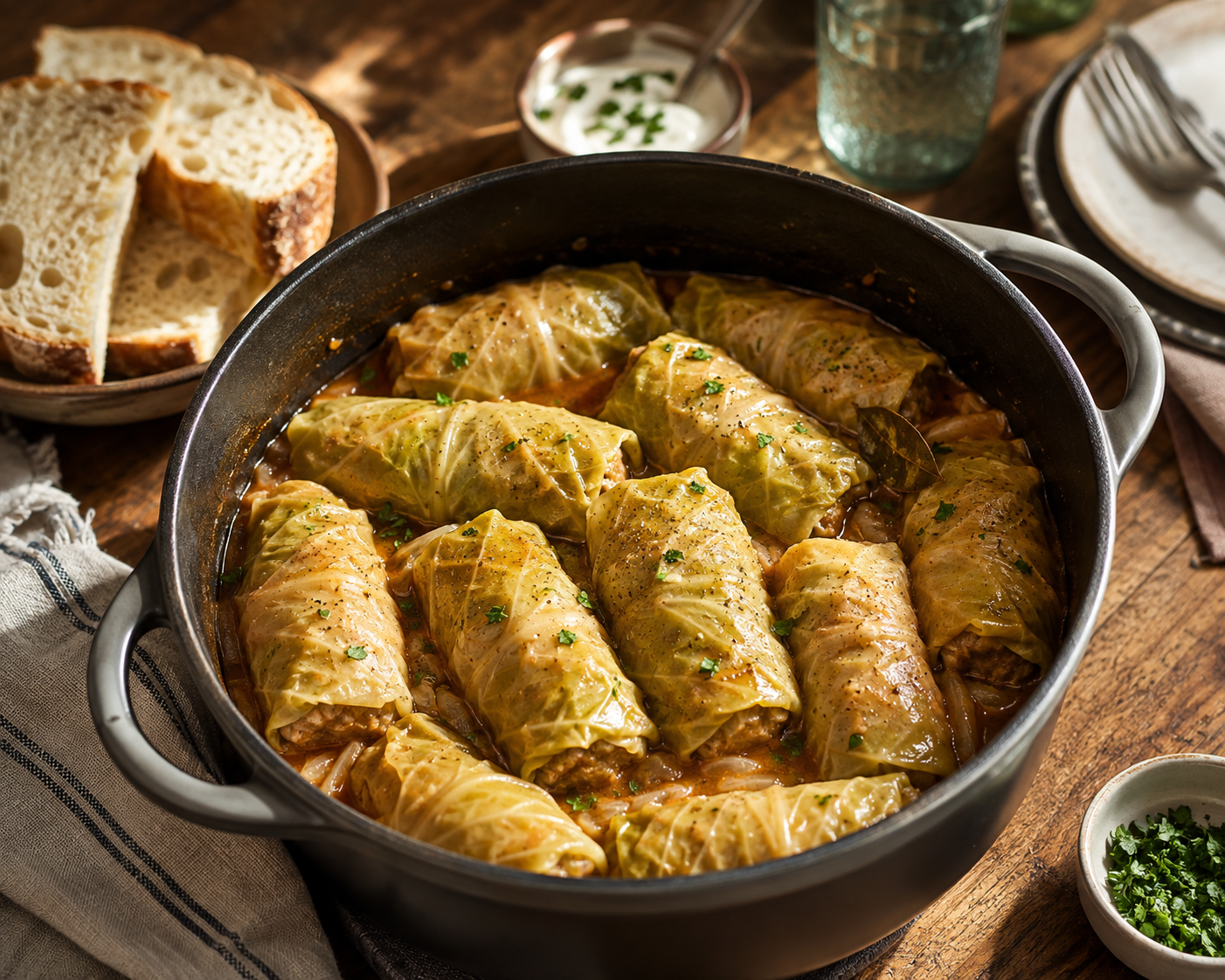
Fresh Cabbage Sarma
Ingredients
Cabbage
- 1 large head green cabbage about 2 to 2 1/2 lb
Filling
- 1 lb ground beef optional: replace up to 1/4 lb with ground pork
- 1 medium yellow onion very finely chopped
- 1/2 cup uncooked white rice rinsed (or 3/4 cup milk-soaked bread, squeezed dry)
- 1 1/2 teaspoons Vegeta-style all-purpose seasoning
- 1/2 teaspoon freshly ground black pepper
- 1/4 teaspoon sweet paprika optional
- 2 tablespoons water or milk
For the Pot
- 1 tablespoon neutral oil or butter
- 1 bay leaf
- 2 1/2 to 3 cups warm water or mild beef broth
- Extra cabbage leaves or a handful of chopped cabbage for lining the pot
Instructions
- Soften the cabbage using one method: freeze the whole head overnight, thaw completely, and peel off leaves; or core and blanch the cabbage, removing leaves as they soften. Trim thick ribs so leaves bend easily.
- In a bowl, gently mix ground meat, onion, rice or bread, Vegeta seasoning, black pepper, paprika if using, and water or milk until just combined. The mixture should feel soft, not dense.
- Place a cabbage leaf flat. Add about 1/3 cup filling near the base, fold in the sides, and roll up snugly but not tight. Repeat with remaining leaves.
- Line the bottom of a heavy pot or Dutch oven with extra cabbage. Arrange rolls seam-side down, stacking neatly if needed. Tuck the bay leaf between rolls.
- Pour warm water or broth down the side of the pot until rolls are just barely covered. Drizzle with oil or dot with butter. Cover and bring to a very gentle simmer.
- Simmer on low heat for 1 1/2 to 2 hours, keeping the heat gentle. Cabbage should be tender and filling fully cooked.
- Remove from heat and rest for 10 to 15 minutes before serving so flavors settle.